Mechanical Watch Regulating Systems Explained: Index Regulator vs. Free-Sprung Balance
In the world of mechanical timepieces, precision is the ultimate measure of quality. At the heart of this precision lies the regulating system – the “brain” of the movement, which controls the oscillation frequency of the balance wheel and hairspring. Today, mainstream mechanical watches employ one of two regulating architectures: the Index Regulator (commonly known as “regulated” or “with index”) and the Free-Sprung Balance (commonly known as “free-sprung” or “without index”). While both serve the same fundamental purpose, they differ significantly in structure, adjustment methodology, performance, and market positioning.
What is an Index Regulator?
An index regulator is a traditional speed-adjustment system that alters the effective working length of the hairspring to change the oscillation rate of the balance wheel.
The key component is the regulator index (often simply called the “index”) – a metal lever with two pins that pinch the outer coil of the hairspring. These pins divide the hairspring into an “active” (oscillating) portion and an “inactive” (fixed) portion. Moving the index changes the length of hairspring that actively participates in oscillation:
Shortening the active hairspring length → faster balance oscillation → watch gains time (+)
Lengthening the active hairspring length → slower balance oscillation → watch loses time (−)
Visual Identification
1. The balance cock (bridge) displays two visible “pins” or “posts”: one is the stud holder (fixing the terminal end of the hairspring), and the other is the movable regulator index.
2. Adjustment is performed by gently pushing the index using a specialized tool.
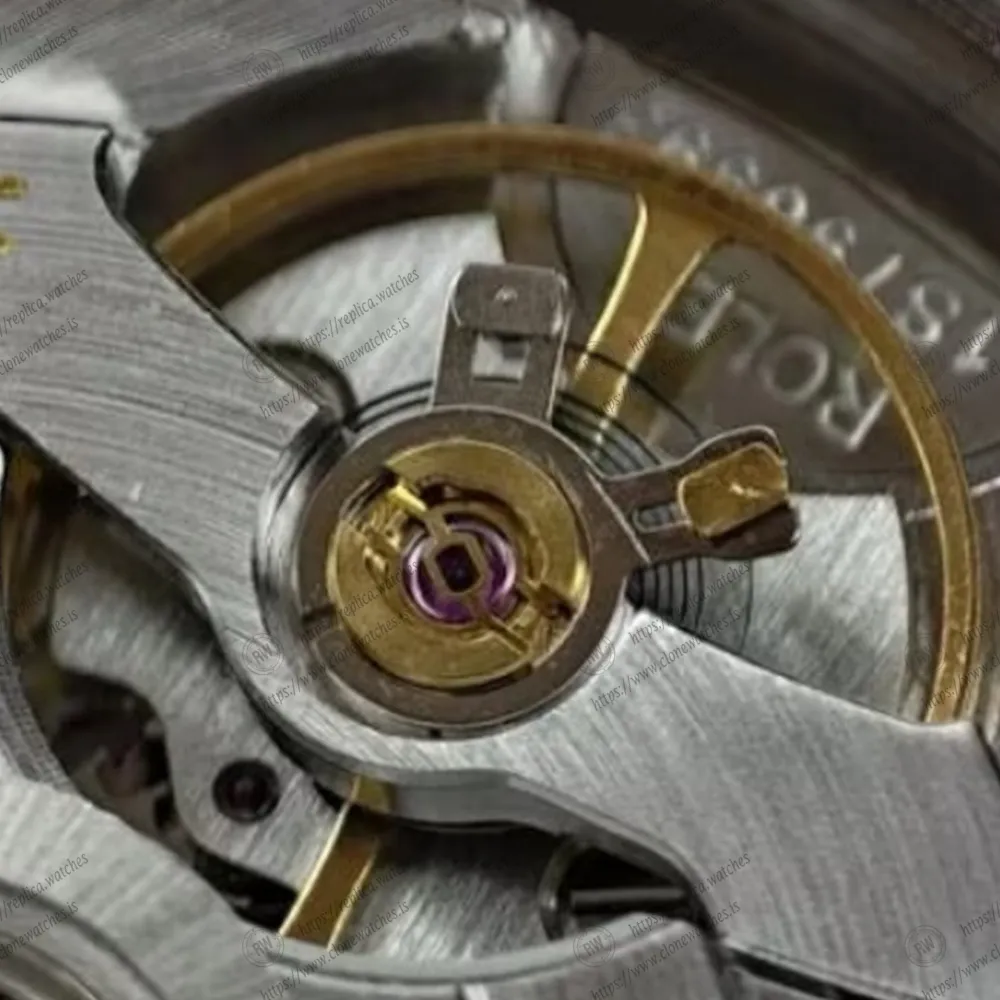
Advantages and Disadvantages
-
✅ Mature, simple construction with lower manufacturing costs
-
✅ Wider adjustment range for quick rate correction
-
✅ Easy to service and regulate; less demanding on technician skill
-
❌ Gaps between the index pins and hairspring can cause friction or sticking, especially after shocks or aging lubricants, leading to unstable timekeeping
-
❌ Because the active hairspring length varies, isochronism errors (rate differences between fully wound and nearly unwound states) are more pronounced
-
❌ Over time, the index position can drift due to physical shocks
What is a Free-Sprung Balance?
A free-sprung balance is a modern, high-end regulating system that does not alter the hairspring’s active length. Instead, it adjusts the rate by changing the moment of inertia of the balance wheel itself.
In this design, the hairspring’s effective length is fixed permanently – there is no index “clamping” it. Instead, the balance wheel rim carries adjustable timing screws or inertia blocks (often called Micro-stella screws, gold regulating screws, or adjustable masses). Regulation is achieved by rotating these screws or weights, thereby changing their radial distance from the center of rotation:
Screws turned outward (increased radius) → higher moment of inertia → slower oscillation → watch loses time (−)
Screws turned inward (decreased radius) → lower moment of inertia → faster oscillation → watch gains time (+)
Visual Identification
1. The balance cock shows only one post – the stud holder for the hairspring. No regulator index is present.
2. The balance rim clearly features multiple adjustable screws or weights (commonly 2, 4, or 8, depending on the caliber).
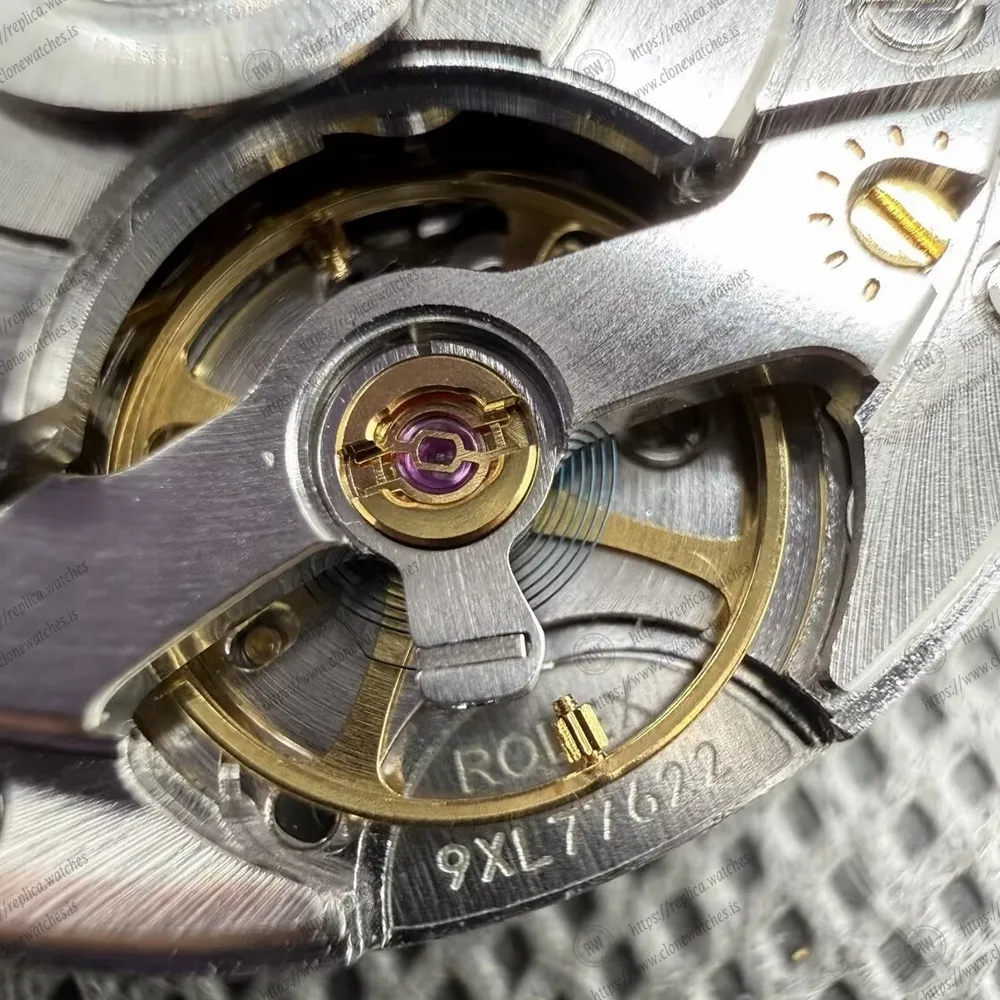
Advantages and Disadvantages
-
✅ Eliminates friction and interference between an index and the hairspring, resulting in superior long-term stability
-
✅ Minimal isochronism error – rate remains remarkably consistent across the entire power-reserve range
-
✅ Better shock resistance – regulating screws are firmly secured and less likely to shift upon impact
-
✅ Represents a higher tier of manufacturing precision and finishing
-
❌ Complex construction with extremely tight machining tolerances
-
❌ Regulation requires specialized equipment and a highly skilled watchmaker
-
❌ Significantly higher production costs; typically reserved for luxury timepieces
Index Regulator vs. Free-Sprung Balance – Detailed Comparison Table
| Aspect | Index Regulator | Free-Sprung Balance |
|---|---|---|
| Regulation Method | Alters effective hairspring length | Alters balance wheel moment of inertia (via radius of weights) |
| Core Components | Regulator index + stud holder | Stud holder only + balance screws/weights |
| Visual Clue | Two “posts” on the balance cock (index + stud) | Only one “post” (stud) on the balance cock; visible screws on the balance rim |
| Adjustment Tool | Pushing the index lever | Special screwdriver turning balance rim weights |
| Regulation Difficulty | Low to moderate; accessible to most watchmakers | High; requires professional equipment and expertise |
| Timekeeping Stability | Moderate – prone to shocks and lubricant degradation | Excellent – maintains precision over prolonged periods |
| Isochronism Error | Noticeable (significant difference between full and partial wind) | Minimal (very consistent throughout power reserve) |
| Shock Resistance | Weaker – index can shift upon impact | Stronger – weights are securely anchored |
| Manufacturing Cost | Lower | Higher |
| Representative Movements | ETA 2824, ETA 2892, Seiko 4R/6R, early Grand Seiko 9S calibers | Rolex 3135/3235, Patek Philippe 324/26-330, Jaeger-LeCoultre, most in-house luxury calibers |
| Typical Market Position | Entry-level to mid-range mechanical watches | Mid-high-end to ultra-luxury watches |
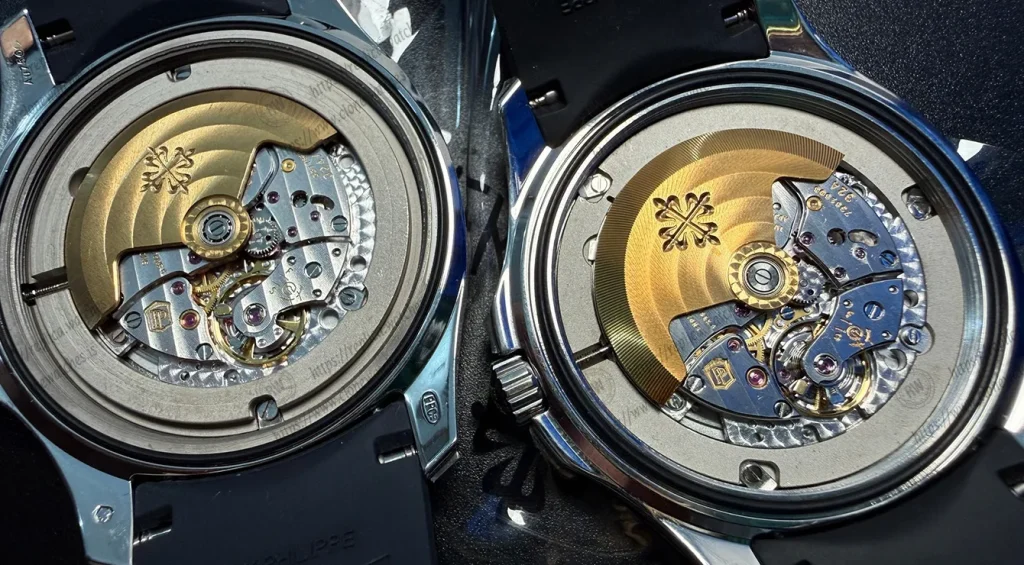
Ready for the Real Thing?
If you have any further questions about our high-quality replica watches, please feel free to contact us. We guarantee you’ll be pleasantly surprised!